

An English social caption can be translated accurately and still look crowded in the original graphic. In Arabic, reading direction can also shift the balance of buttons and emoji. The issue is often not the translation itself, but a design that still follows the source language.
1. Translation changes the shape of a page
Chinese can carry dense information in a short line, while English and Portuguese often need more width. Japanese has its own reading rhythm. Do not force every language into the same centered two-line layout. Establish the priority of the message first; when space is tight, shorten secondary copy or change the structure before shrinking every word.
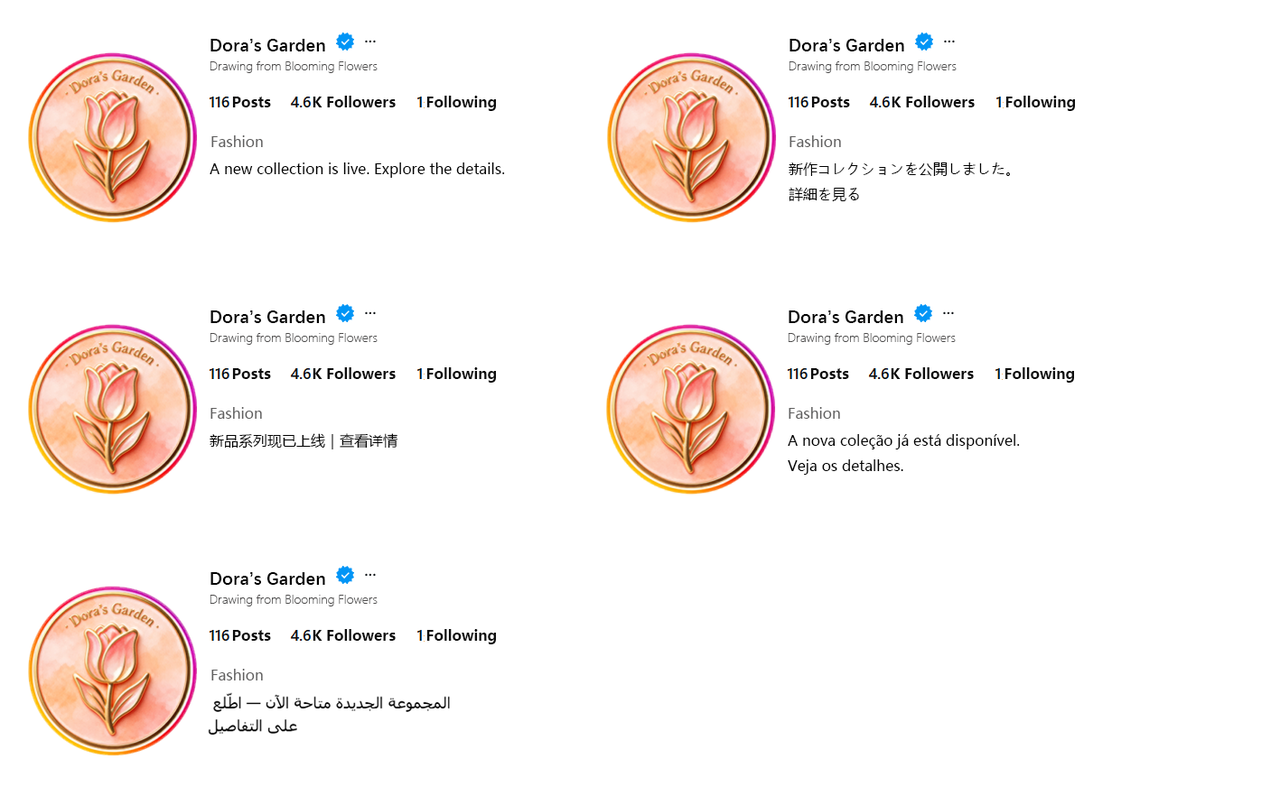
2. Line breaks and punctuation are localization work
Chinese and Japanese have line-breaking conventions for punctuation. Arabic runs right to left, while numbers, URLs, and Latin brand names may retain left-to-right order. Its letters also join contextually, so Latin-style `letter-spacing` can create unnatural gaps. Check line breaks, punctuation, direction, CTA alignment, and font coverage before publishing.
3. Emoji do not localize brand meaning by themselves
Unicode specifies characters and sequences, not identical artwork on every platform. An emoji must fit the target context and retain the intended visual weight on real devices. Use it to support tone, not to carry prices, dates, warnings, or instructions.
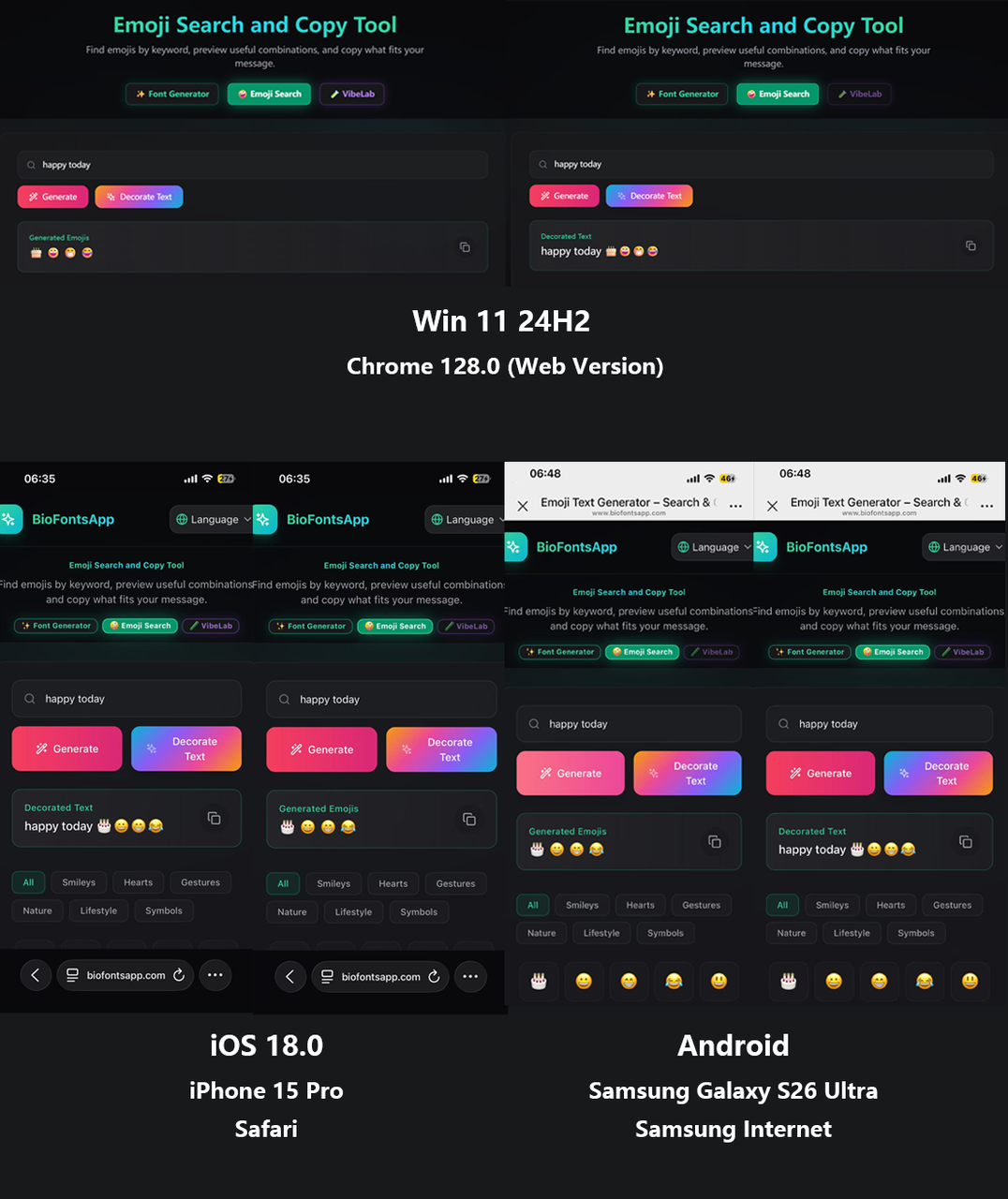
4. Decorative Unicode styles do not transfer across writing systems
Bold, Script, Gothic, and Double-Struck styles use special Latin Unicode characters. Equivalent full sets do not exist for Chinese, Japanese, Korean, Arabic, or Cyrillic. Use framing, symbols, and layout for non-Latin contrast; keep search terms, handles, contact details, and accessibility-critical text plain.
5. A workable visual-localization process
Translate information priority first. Place copy in real web, mobile, and social-image containers. Rebuild hierarchy by language; check line breaks, RTL, numbers, and names; limit decorative characters; test one desktop and two common mobile environments; then ask a local reader whether the result feels natural and easy to scan.
Conclusion
Direct translation answers what is said. Visual localization addresses how users see and process it. Consistent brand recognition matters, but each writing system also needs room to breathe.