
BioFontsApp

VibeLab Aesthetic Studio

Master the viral aesthetics of social media captions, fonts, and emojis.

Cross-Cultural Emoji Guide: Hidden Meanings and Pitfalls Across Cultures

Cross-Cultural Emoji Guide: Hidden Meanings and Pitfalls Across Cultures

โ€ข 5 mins Read Time

โšก Key Takeaways

Uncover the hidden cross-cultural meanings of common emojis and learn essential rules for safe, effective international communication across social and professional settings.

> Editorial note: These are possible interpretations, not fixed rules for every person in a country or culture. Meaning changes with context, age, community, and time.

Cross-Cultural Emoji Guide: Hidden Meanings and Pitfalls Across Cultures

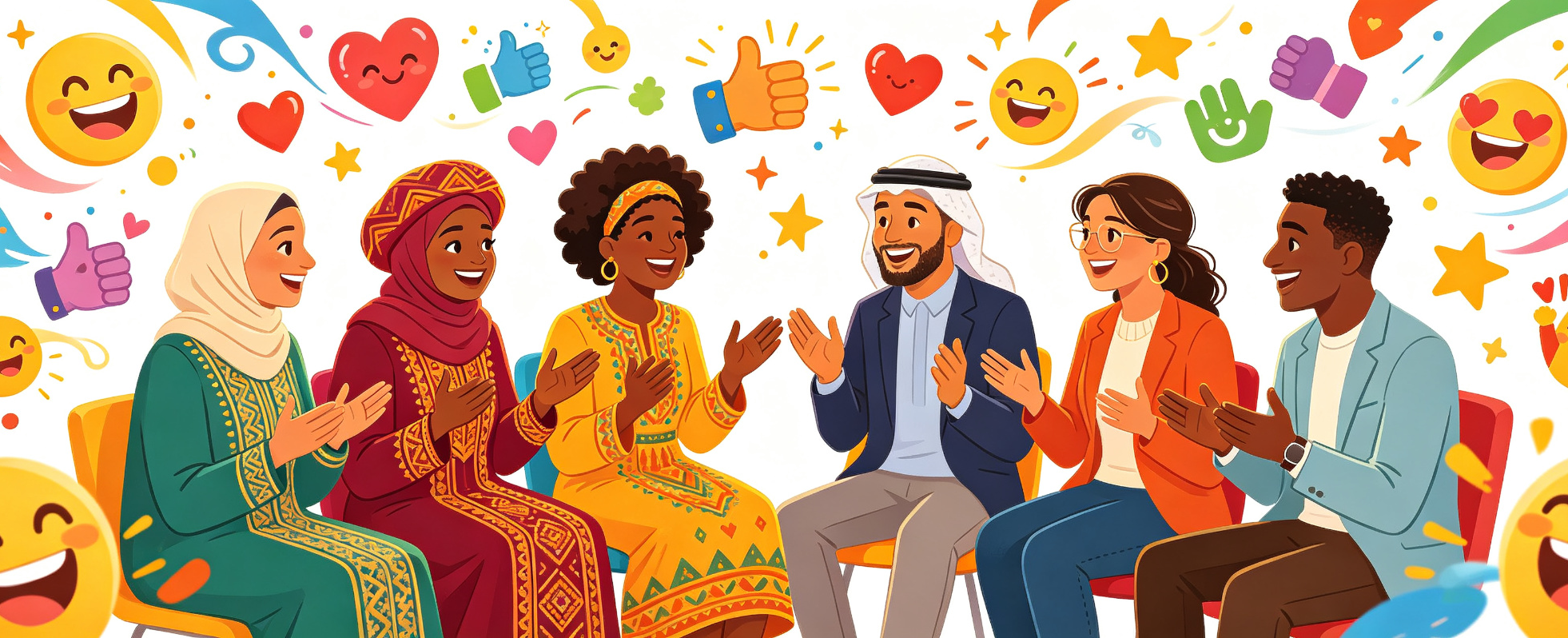
We often assume emojis are a universal language, but in cross-cultural communication, they function more like coded cultural signals.

The exact same emoji can carry drastically different meanings across different countries, age groups, and contexts. Used correctly, an emoji builds instant rapport; used incorrectly, it can cause embarrassing misunderstandings or unintentionally cause offense.

Here is a guide to high-risk emoji traps and cultural nuances to help you navigate international communications:


๐Ÿ–๏ธ Hand Gestures: High-Risk Zones for Misunderstanding

These emojis map directly to physical gestures and are the most susceptible to being interpreted as provocative or vulgar.

๐Ÿ‘Œ (OK Hand)

Western & Most Global Contexts*: Means "OK", "good", or "agreed".

Brazil, Turkey, parts of Germany*: Considered highly offensive (equivalent to giving someone the middle finger).

France*: Can represent "zero" or "worthless".

๐Ÿ‘ (Thumbs Up)

Most Regions*: Expresses approval, praise, or acknowledgment.

Parts of the Middle East (e.g., Iran), West Africa, Southern Europe*: Viewed as an offensive and aggressive gesture.

โœŒ๏ธ (Victory / Peace)

Palm Facing Outward*: Universal gesture for victory or peace.

Palm Facing Inward (Back of hand showing)*: In the UK, Australia, Ireland, and New Zealand, this is equivalent to an obscene gesture.

๐Ÿ™ (Folded Hands)

Common Everyday Context*: Used for "please", "thank you", or "praying".

US Youth / Pop Culture*: Frequently interpreted as a "high five".

India & Southeast Asia*: Represents a sacred religious greeting; using it casually can seem disrespectful.


๐Ÿ† Food and Objects: Unspoken Innuendos

On social media, seemingly ordinary produce symbols have taken on specific slang meanings.

๐Ÿ† (Eggplant) & ๐Ÿ‘ (Peach)

Literal Meaning*: Ordinary vegetables and fruits.

Popular Online Slang: Represent male genitalia and buttocks respectively, carrying strong sexual undertones. Avoid sending these to foreign colleagues, professors, or casual acquaintances.

๐Ÿฅต (Hot Face)

Literal Meaning*: Expresses feeling hot, exhausted, or stressed.

Online Slang*: Often connotes feeling attracted or "horny". Using it in professional settings can lead to serious awkwardness or harassment misunderstandings.

๐Ÿ’ฆ (Sweat Droplets)

Literal Meaning*: Represents sweating, embarrassment, or hard work.

Online Slang*: Frequently used with sexual connotations. Best avoided in workplace chats.


๐Ÿ˜Š Facial Expressions: Reversed Emotional Signals

The emotional tone conveyed by an emoji can be completely inverted depending on the user's background.

๐Ÿ˜Š (Slightly Smiling Face)

Traditional Meaning*: A polite, friendly smile.

Youth / Online Culture*: Often carries passive-aggressive subtext ("fake smile", or "I am upset but maintaining composure"). For genuine happiness, ๐Ÿ˜„ or ๐Ÿ˜ are preferred.

๐Ÿ˜‰ (Winking Face)

Literal Meaning*: Playful, cheeky, or joking.

Western Contexts*: When sent to acquaintances, it can easily be interpreted as flirting or having romantic intent.

๐Ÿ’€ (Skull)

Traditional Meaning*: Death, danger, or spookiness.

Gen Z Slang*: Means "I'm dying of laughter" (equivalent to laughing hysterically). Be cautious sending this to older generations or managers, as they may take it literally.

๐Ÿ™„ (Rolling Eyes)

General Meaning*: Expresses annoyance, disdain, or exasperation.

Southern Europe (e.g., Spain)*: While it still means exasperation, it is sometimes used lightly among friends when complaining about minor things, though still impolite in formal settings.


โ˜• Lifestyle & Status: Social Media Slang

Certain emojis have evolved into unique cultural shorthand online.

โ˜• (Hot Beverage / Coffee)

Literal Meaning*: Drinking coffee or taking a break.

Internet Slang*: "Sip tea" (or coffee) refers to watching drama or gossiping.

๐Ÿ’… (Nail Polish)

Literal Meaning*: Getting nails done or self-care.

Online Culture*: Represents confidence, unbothered attitude, or an "I don't care" vibe.

๐Ÿ (Goat)

Literal Meaning*: A farm animal.

Sports & Pop Culture: Stands for Greatest Of All T*ime (G.O.A.T.), representing a strong humorous reaction in some online communities.

๐Ÿ”’ & ๐Ÿ”“ (Locked & Unlocked)

Literal Meaning*: Lock states.

Social Media Bios*: Refers to relationship status. ๐Ÿ”’ means taken / in a relationship; ๐Ÿ”“ means single.


๐Ÿ’ก Safe Communication Tips for Cross-Cultural Emojis

1. Simplify in Formal Settings: When communicating with international clients, managers, or elders, minimize emoji use. Stick to basic, unambiguous symbols (like ๐Ÿ‘, โœ…, ๐Ÿค) or use clear text.

2. Look Up Unclear Meanings: If you are unsure about an emoji's nuance, do a quick online search to check its contextual meanings before sending.

3. Observe Local Habits: Pay attention to how native speakers and international peers use emojis in chat, and follow their lead to stay on the same wavelength.

#Culture#Emoji#Communication

FAQ

Our free font generator supports Instagram fonts, TikTok fonts, Twitter display names, WhatsApp messages, Discord nicknames, Reddit usernames, and 40+ aesthetic Unicode text styles. Works with English, Chinese, Japanese, Korean, Russian, Arabic, and more languages.

In-Depth Guide

Ultimate Guide to BioFontsApp: Elevate Your Social Media Presence

In the fast-paced digital world of Instagram, TikTok, and Twitter, standing out is more important than ever.

01

What Is an Aesthetic Font Generator?

Many users wonder if stylish fonts require installing complex software or custom keyboard extensions.

When you type text into our generator, our client-side JavaScript maps standard alphanumeric characters...

02

How to Use Fancy Fonts on Instagram, TikTok & Discord

Using our custom font style changer takes less than three seconds:

  1. 1

    Input Your Text. Type or paste your desired phrase, username, or quote into the main input field.

  2. 2

    Choose Your Style. Scroll through our automatically generated list of 40+ unique text styles.

  3. 3

    Copy & Paste. Click the "Copy" button next to your favorite design. Open your target platform.

03

Pro Tips for Boosting Engagement with Custom Typography

While utilizing fancy letters can dramatically increase your profile's aesthetic appeal...

  • Highlight Key Words: Use bold or italic Unicode variations exclusively for headers.

  • Maintain Accessibility: Avoid converting entire paragraphs into complex cursive or gothic formats.

  • Check Device Compatibility: Older OS versions might display certain advanced Unicode characters as blank boxes.

04

Why Choose BioFontsApp?

Unlike other platforms cluttered with aggressive pop-up advertisements or paywalls...

Combined with lightning-fast load times and comprehensive multi-language support...

40+ Font Styles12 Languages100% FreeZero InstallPrivacy-First